


 +44 7868 196743
 support@voltfx.ai


Time period
short periods can overstate the meaning of a result; use the full approved history.
 Get in touch
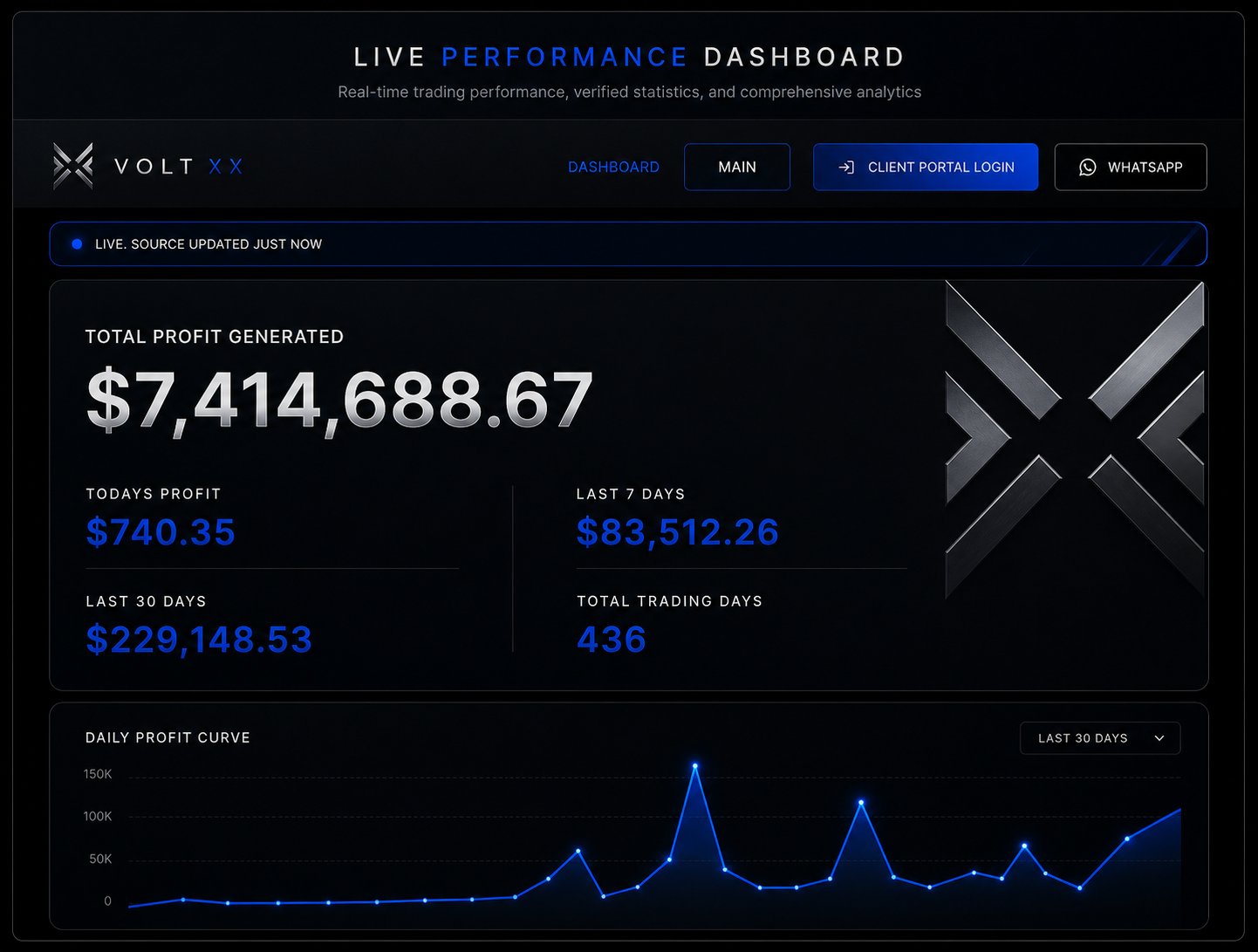
This page is designed to help suitable prospects review verified historical results in context. It should show the complete approved period, the source of the information, the relevant return and drawdown measures, material costs and the limitations of the data.
Trading involves risk, including possible loss of capital. Historical performance does not guarantee future performance and should not be treated as typical, fixed or expected.
Review performance responsiblyshort periods can overstate the meaning of a result; use the full approved history.
state the calculation method and whether it is net of material costs.
shows the decline from a prior peak and helps explain the losses experienced during the period.
results may vary materially from month to month or across market conditions.
cash flows can distort simple account-balance comparisons and must be handled correctly.
individual accounts may experience different timing, spread, slippage, fees or broker conditions.
State the account source, reporting period, currency, starting balance methodology, treatment of deposits and withdrawals, fee basis, compounding method, handling of open positions and any data exclusions. Explain whether the result reflects a live account, model, backtest, composite or other dataset. Do not combine these categories or describe simulated information as live performance.
A strategy can respond differently across trending, range-bound, volatile or illiquid markets. The approved performance period should be accompanied by a factual description of relevant market conditions, without claiming that a single event caused a result unless supported by analysis. Future conditions may differ materially from the reviewed period.
Losses can occur even after a strong historical period. Performance may change because of market conditions, strategy behaviour, leverage, execution, liquidity, broker events, software changes, technical interruptions and client-specific account factors. Do not proceed based on a return number alone. Review the full Risk Disclosure and the operating model for the relevant route.
Read the Risk DisclosureA suitability call can explain the route, operating structure, costs and risk information. It cannot guarantee future results or provide personalised financial advice.
Book a suitability callNo. Historical performance is not a guarantee or forecast.
No. Individual outcomes can differ because of execution, timing, costs, liquidity and other account factors.
Drawdown helps explain loss experience within a historical period and provides essential risk context.
Only where the approved sources, periods, methodology and material differences are clearly explained.